
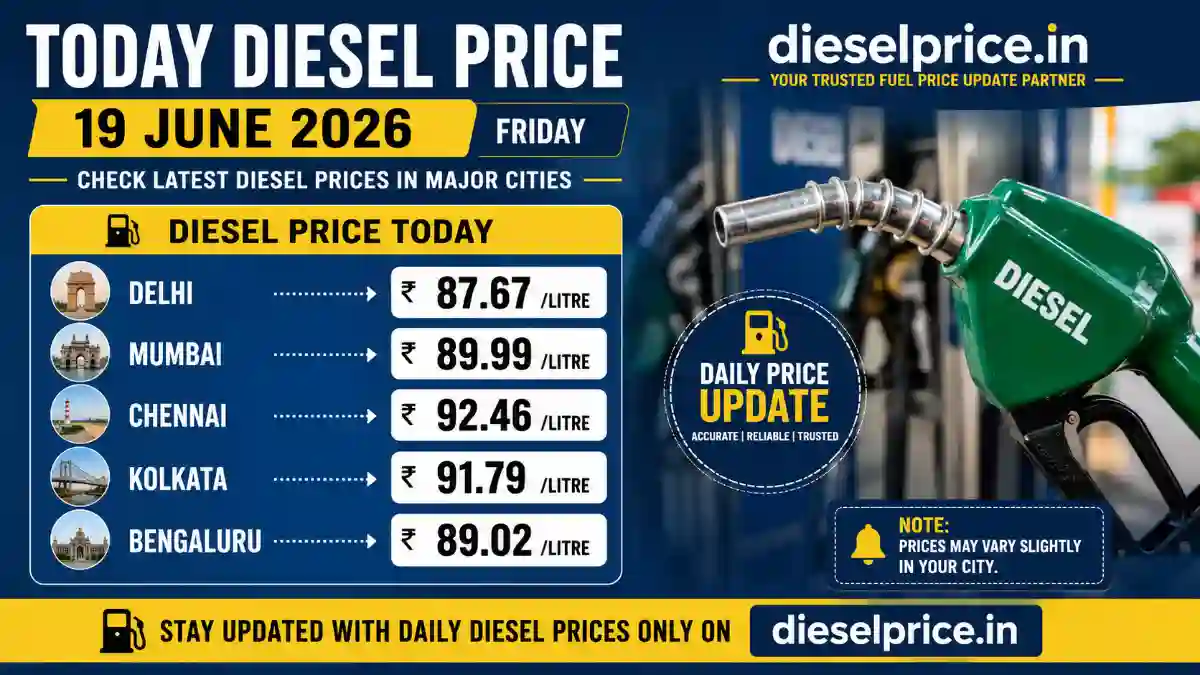
Today Diesel Prices June 19: Here’s What Fuel Costs in Delhi, Mumbai, Chennai, Kolkata, Bengaluru
Indian consumers woke up to fresh updates at the fuel pumps this morning. Managing your monthly travel budget requires a clear look at the latest retail rates across major metro cities. For millions of commuters and businesses, keeping track of the daily diesel price today has become an essential part of financial planning.
The cost of fuel directly dictates transport overheads, which eventually shapes the price of your daily groceries. Today, we break down the exact numbers across India's biggest economic hubs. We will also look at the global market forces influencing these domestic rates.
Staying informed helps you plan your refueling stops better and manage your household expenses. Let us dive straight into the current city rates and find out what is driving the fuel market news India is tracking today.
Why Are Fuel Prices Changing Right Now?
Domestic fuel prices do not exist in a vacuum; they are tied tightly to international oil benchmarks. Crude oil movements fluctuate daily based on global supply dynamics and geopolitical tensions. When Brent crude or WTI crude prices climb up, Indian state-run oil companies feel the immediate heat.
The value of the Indian Rupee against the US Dollar also plays a massive role in this mathematical equation. Because India imports over 85% of its crude oil requirements, a weaker Rupee makes oil imports much more expensive. Any shift in the currency exchange rate impacts the final retail price at your local pump.
Furthermore, production decisions taken by OPEC+ nations heavily control global oil availability. When major producers cut down supply, international prices naturally witness a steady increase. Indian Oil Marketing Companies (OMCs) monitor these global cues alongside domestic factors to evaluate daily pricing.
How This Affects Common People in India
A minor shift in the fuel price in India can trigger a significant domino effect across the entire retail economy. Daily commuters using diesel SUVs or public transport buses feel the pinch directly in their wallets. Higher fuel costs translate to increased monthly travel expenses for working professionals and families.
The impact is even more severe for transport operators, cab drivers, and logistics companies. Because diesel is the primary fuel powering commercial trucks, any diesel price hike raises the cost of moving goods. When shipping rates go up, companies pass those costs down to the final retail consumers.
Ultimately, this affects the price of everyday essentials like fruits, vegetables, milk, and household groceries. Small businesses operating delivery fleets also face squeezed profit margins due to rising overheads. For the average citizen, fuel pricing is not just about logistics—it dictates overall retail inflation.
State-wise Diesel Price Snapshot
Fuel rates differ significantly from one region to another due to localized tax structures. Here is a snapshot of the current retail prices across major Indian metros today.
City | Diesel Price (Per Liter) |
|---|---|
Delhi | ₹87.62 |
Mumbai | ₹92.15 |
Bengaluru | ₹88.94 |
Chennai | ₹92.43 |
Kolkata | ₹90.76 |
Note: Prices vary by state due to local VAT, freight charges, and local body taxes. Check live fuel prices in your city regularly to get the most accurate local pump rates.
Role of Government and Oil Marketing Companies (OMCs)
State-run giants like Indian Oil Corporation (IOC), Bharat Petroleum (BPCL), and Hindustan Petroleum (HPCL) control the majority of fuel stations. These OMCs utilize a dynamic fuel pricing mechanism to adjust domestic retail rates alignment with international averages. This system ensures that local prices reflect global market realities with reasonable speed.
However, the final price you pay at the pump includes heavy layers of taxation. Central excise duties and state-level Value Added Tax (VAT) make up a substantial portion of the retail price. Dealer commissions paid to petrol pump owners are also added to the base cost before the final bill is generated.
While the central government keeps a close watch on economic inflation, state governments modify VAT rates based on local budgetary requirements. This dual taxation system is the primary reason why fuel costs vary so much when you cross state lines. For alternative fuel users, keeping an eye on the latest CNG price update also reveals how broader energy tax policies shift over time.
Expert Analysis: What the Numbers Really Mean
By Arvind Pal, Founder & Senior Fuel Price Analyst, DieselPrice.in
"Looking at the current energy landscape, retail fuel prices are navigating a very narrow corridor. Global crude oil prices are facing resistance at higher levels due to shifting industrial demand in major economies. However, domestic pricing remains stable because oil marketing companies are balancing prior marketing margins against sudden global spikes.
Indian consumers should closely monitor the US Dollar index and upcoming OPEC+ review meetings over the coming weeks. If global crude manages to stay within a stable band, we can expect retail prices to remain relatively steady. Any sudden geopolitical disruption in oil-producing regions, however, could immediately test the resilience of our domestic pricing cushions.
The long-term outlook suggests that OMCs will continue to prioritize price stability to protect retail consumers from extreme volatility. Keep an eye on regional tax announcements, as individual states occasionally adjust VAT to provide localized relief."
What Should Indian Consumers Do Right Now?
- Plan Your Trips Wisely: Combine multiple small errands into a single, well-planned route to reduce unnecessary fuel consumption.
- Maintain Your Vehicle: Check your tyre pressure weekly and stick to regular engine servicing to improve your vehicle's overall mileage.
- Explore Alternative Fuels: If your daily running is high, consider switching to vehicles utilizing a stable CNG price today or explore modern electric vehicle options.
- Use Loyalty Programs: Sign up for fuel cards and digital payment reward programs offered by OMCs to accumulate cashback and saving points.
- Practice Smooth Driving: Avoid sudden acceleration and aggressive braking, as steady driving habits significantly cut down your vehicle's fuel appetite.
Future Outlook: What's Coming Next?
Over the next 30 to 60 days, fuel demand will likely mirror seasonal economic activity across rural and urban India. Monsoon patterns often slow down construction and transport activities temporarily, which can ease short-term domestic demand for diesel. This minor dip in local consumption usually provides a breathing window for national fuel inventories.
On the international front, global central bank policies regarding interest rates will heavily dictate industrial oil consumption. If major global economies experience steady industrial growth, global crude prices might see upward pressure. Conversely, any economic slowdown abroad will keep crude oil prices locked inside a manageable trading bracket.
We should also expect stable domestic pricing policies as the government focuses on managing core retail inflation levels. Barring any major international supply chain shocks, dramatic price swings are highly unlikely in the immediate future. Consumers should expect steady, marginal adjustments rather than sharp, sudden spikes at the pumps.
Conclusion
Understanding the shifts in the petrol price today and diesel rates helps you stay ahead of your monthly travel budgets. While global factors continue to pull the strings behind the scenes, domestic tax structures ultimately shape your final retail bills. Staying aware of these market realities ensures you can make smart, cost-effective decisions for your household or business fleet.
As energy markets evolve, tracking small shifts in pricing indicators will remain crucial for budget-conscious citizens. Small modifications in your daily driving habits and smart vehicle upkeep can go a long way in softening the blow of high energy costs.
To make sure you never miss a critical price revision, keep tabs on the latest market movements daily. Stay updated with daily petrol and diesel prices at DieselPrice.in.